
Hey!
Welcome to your monthly dose of product wisdom, straight from the dualoop team.
It is entirely possible to ship every feature on time and keep every stakeholder happy while your core business metrics stay completely flat.
This month's edition looks at the mechanisms that ensure your delivery actually leads to impact:
- How to use an outcome-based roadmap to offer genuine guidance to the business without making promises you inevitably have to break later on.
- Why silence is rarely the same thing as alignment, and how mapping your stakeholders can prevent the project from drifting off course just as it picks up speed.
- Nodalview’s story about failing twice at AI, demonstrating that integrating new capabilities is usually a structural challenge rather than a code problem.
- And more!
Let's dig in 👀
🔥 Build an outcome based roadmap
Most product teams struggle with roadmap planning. At dualoop, we’ve seen dozens of product teams treat roadmaps as a list of things to build. But a roadmap isn’t a list of features to build, it’s a strategic communication tool to align teams around impact and keep stakeholders confident.
We use the outcome-based roadmap, a product planning tool that organises work around measurable business outcomes rather than feature deliverables. Instead of listing 'what we'll build and when,' outcome-based roadmaps communicate 'what results we're driving and how we'll know we've succeeded.'
Framing your roadmap around outcomes allows you to commit to solving the right problems rather than simply promising features. The initiative stays flexible as discovery unfolds, the outcome stays constant.
The Now-Next-Later framework
The cleanest way to structure an outcome-based roadmap is through three time horizons.

Now (current quarter):
What the team is actively working on. High certainty. These are validated initiatives with clear ownership and metrics.
Next (3 to 6 months):
What you expect to tackle soon, once current discovery confirms direction. Medium certainty. These are prioritised problems with hypotheses forming.
Later (beyond 6 months):
What's on the radar for future exploration, often still vague. Low certainty. These signal strategic intent without pretending to have solutions yet.
Each section connects objectives on the left to initiatives on the right.
This format works because it's transparent about what's active, planned, and exploratory. It invites discussion and reinforces the fact that discovery is ongoing, not complete.
The quality of your roadmap depends on how you build it:
- Co-create it with your product trio (PM, designer, tech lead)
- Involve stakeholders early so they become co-owners of the direction instead of passive reviewers of your slides.
- Update it monthly as discovery reveals new insights.
📅 Don't miss it
Here’s where you can learn, connect & grow with us:
Product management training
Training • May 18 + 19th • Brussels
Join the next cohort of our product management training in Brussels. Early bird ends Friday, April 3rd!
More coming up
MWC | Barcelona, Spain | March 2-5
Product Hive 2026 | Warsaw, Poland | March 18-19
AI Product Day | Paris, France | March 23
Don't want to miss our upcoming events? Subscribe here
⭐️ Stakeholder mapping for product initiatives
Product initiatives rarely fail because of bad ideas or weak execution, they fail when alignment is not explicit.
Too often, teams assume they're aligned because the roadmap was shared without immediate objections. But frictions start to appear once the work is gaining momentum and the decisions actually start to carry weight
Stakeholder mapping prevents this drift by establishing explicit alignment early and engaging the right people appropriately throughout.

We share the practical mechanics:
- How to map individuals (not roles)
- The four engagement strategies
- Why this should be a shared exercise
When applied consistently, stakeholder mapping shifts from managing people to shaping the environment where product teams can do their best work.

👀 Nodalview's AI implementation
During our last Product Apéro, Sam Boribon from Nodalview shared a refreshing breakdown of why their AI strategy failed twice before it finally succeeded.
1. They started by hiring a specialised academic expert to build the capability in-house. While the technical knowledge was sound, the work remained isolated in a silo, meaning progress was too slow to impact the core product effectively.
2. Next, they pivoted to hiring external AI specialists to accelerate delivery. This looked promising on paper, but the deliverables failed to meet production standards as the external team didn't own the full loop from problem to implementation.
3. The breakthrough came when they stopped treating AI as a feature to buy and started treating it as a capability to absorb. They acquired a small team that already had a rhythm of shipping and iterating together, focusing heavily on human integration and tight feedback loops rather than just code.
🚀 Escaping the build trap review
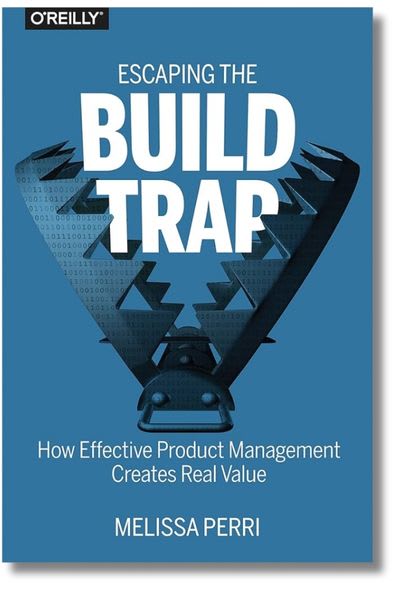
It is a disorienting experience to ship every feature on time and keep stakeholders perfectly happy, only to realise that the company’s core business metrics haven’t moved at all. Melissa Perri defines this as the Build Trap, a situation where teams measure success by outputs (like the number of features shipped or story points completed) rather than the actual value those things create.
She argues that this often happens because companies fall into a "Product Death Cycle," allowing customers to dictate specific solutions rather than just explaining their problems. This turns the product team into a factory delivering code without understanding the wider strategy.
We consider this book a staple: it offers a clear path toward becoming a product-led organisation, where the strategy is evaluated based on outcomes rather than just fulfilling contracts or clearing a backlog.
∞ How dualoop helps
The patterns we share in this newsletter come directly from our daily work with companies building great products.
Where we typically support:
- Shape product organisation structure, governance, operating models
- Empower teams through product training, coaching, leadership development
- Build alongside clients on strategy exercises, discovery support, transformation roadmaps
- Staff engagements with experienced product consultants embedded in your teams
If these challenges sound familiar to your current context, let's talk!

