
Hey!
Welcome to your monthly dose of product wisdom, straight from the dualoop team.
This edition is a mix of practical resources and a few things we have been thinking about lately. Some of it is for you, some of it is for someone on your team, a couple of things are just worth reading.
Let's dig in 👀
🔍 Risk and assumption mapping
Most teams start building before they know what they do not know.
They have a hypothesis, they feel confident enough, and they ship. But the assumption was never tested, and six weeks later, it turns out to be wrong.
Risk and assumption mapping is a simple practice that forces you to make your assumptions explicit before you commit resources. The exercise has three steps:
1. Surface everything you are assuming.
Write down every belief your solution depends on being true, about the user, the problem, the technical feasibility, the business model. Do not filter yet.
2. Score each assumption.
Two axes: how risky is it if this turns out to be wrong, and how easy is it to test? The assumptions that are high-risk and testable are your priorities.
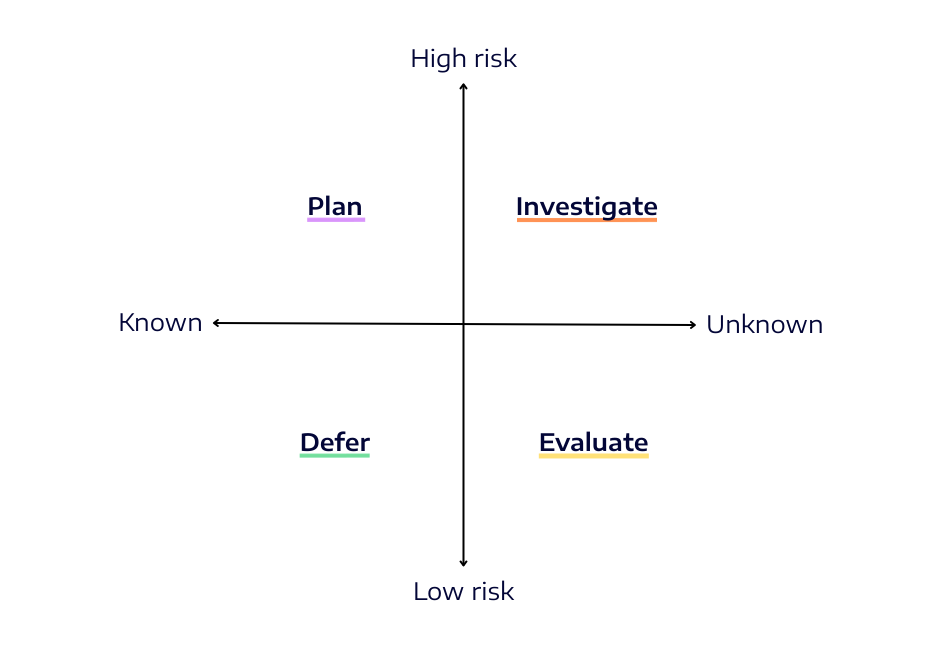
3. Design your experiments around the top assumptions.
Not the most interesting ones. Not the ones you already believe. The ones where being wrong would hurt the most.
The practical shift this creates: instead of building to learn, you learn before you build. You go into delivery with fewer surprises and a much clearer sense of what you are still betting on.
🔥 Is the PM training right for you?
We get this question a lot, so we wrote an honest answer.
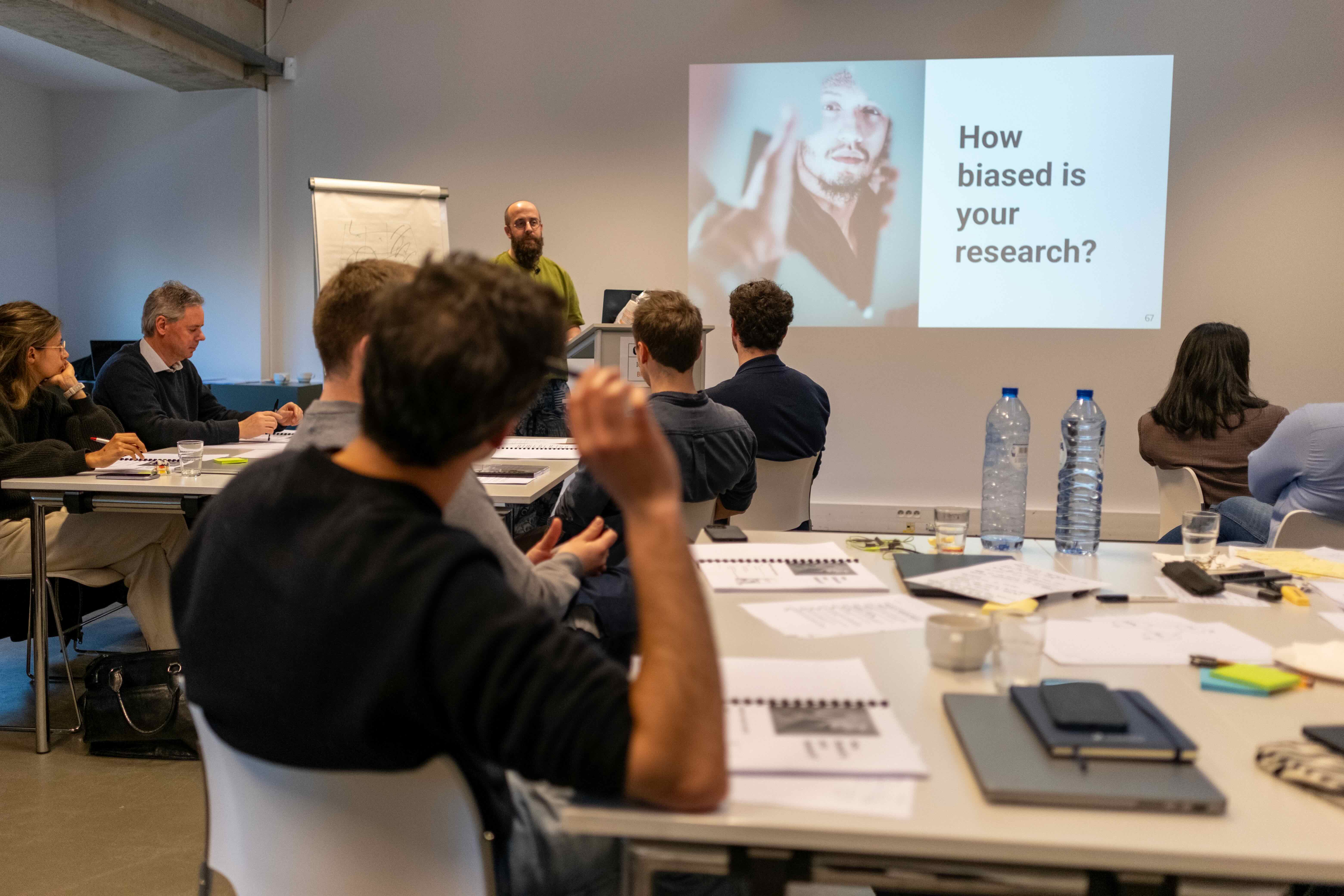
The dualoop Product Management Training is not for everyone. The people who get the most from it tend to share one thing: they have real product work in front of them and want a more principled way to approach it.
It is two intensive days in Brussels, covering the full PM lifecycle from strategy and problem framing through discovery, delivery, and measurement, designed for people who want to close real gaps and build a shared language with their team.
The article breaks down who gets the most out of it, what the format looks like, and what past participants have shared. If you have been thinking about joining, this is worth a few minutes of your time.
The next training runs May 18–19 in Brussels.
Early bird pricing ends this April 3rd.
📅 Don't miss it
🎓 Product management training
Training • May 18 + 19th • Brussels
Two-day training with our expert product trainer, Mathieu Thys. He'll take you through the full PM lifecycle with practical tools you can use from day one. Early bird ends this Friday, April 3rd.
The age of vibecoding: From AI prototyping to native apps
Webinar • April 14 • 11AM
Elena Avramenko joins us to walk through the AI-native product workflow: from fast prototyping to building native mobile apps.
AI in discovery: the questions you forgot to ask
Product Apéro • April 22 • 6PM • Brussels
Kalina Lipinska, Head of Product at Teamleader will share how they use AI to sharpen discovery, and what it looks like to use AI as a thinking partner in discovery.
More coming up
AI5050 | Brussels | March 31st
OFFF Barcelona | Barcelona, Spain | April 16-18
Crafting Products | Darmstadt, Germany | April 16
Product Owner Days | Cologne, Germany | May 4-6
ProductWorld Europe | Opatija, Croatia | May 5-6
AI Summit Europe | Riga, Latvia | May 6-8
Don't want to miss our upcoming events? Subscribe here ->
🚀 Blue Ocean Strategy

Blue Ocean Strategy makes a different argument: the real growth is often sitting outside the market you are already competing in. And real differentiation means deciding what not to do just as much as what to build.
Most product teams spend more time watching their competitors than talking to the people who never considered their product at all. They add features to keep up and end up looking like everyone else in the space.
We reviewed the book and added a diagnostic your team can run straight away.
👀 Hear it from dualoop
Something that came up in a coaching session recently: “When I take an initiative, I don't know if it's a good idea.”
This came from a senior person. Not new. Competent. They had stopped acting on their own judgment because nobody had ever told them which decisions were theirs to make.
Timoté's take: you cannot fix this with encouragement. The problem is not the person, it is the organisation being unclear about authority. When the boundaries are vague, the safest move is always to wait for permission.
The fix is practical: name the boundaries, say what happens when someone gets a decision 80% right, and make it easy to ask without it being a big deal. When someone takes initiative and it mostly works, that is the moment to celebrate.
∞ What we do at dualoop
In case you are new here: dualoop is a product management consultancy based in Brussels. We help product teams and the leaders running them to work better through training, coaching, and transformation work with scale-ups and large enterprises across Europe.
If you are wondering whether we could help with something specific, the best starting point is a conversation.

